6 Best CM.com Halo Alternatives (2026): Which AI Agent Is Best for Your E-Commerce Store?
TL;DR
- CM.com Halo is a conversational AI chatbot, but many e-commerce teams run into serious hallucination issues and off-topic responses
- Building reliable chat integrations with Halo requires significant technical effort and custom development
- For e-commerce support that needs accurate, context-aware responses and real actions, purpose-built alternatives deliver better results
- If you want reliable AI support without hallucinations and with easy self-service setup, Minimal AI is the strongest Halo alternative
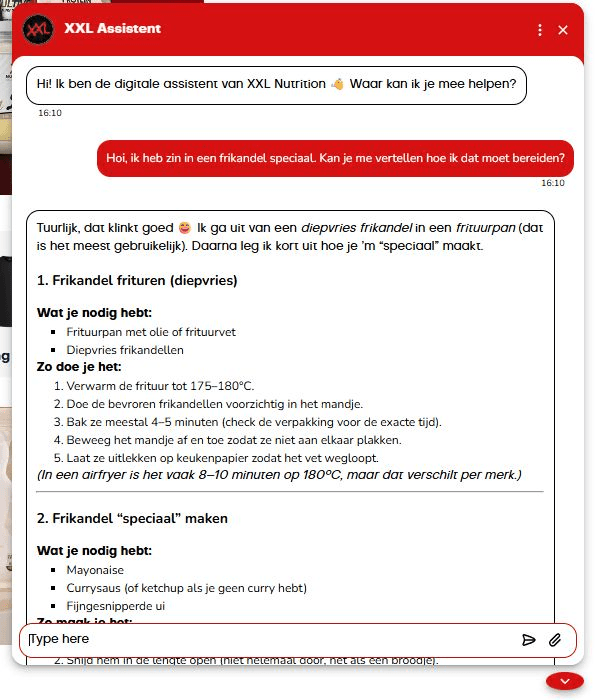
Getting AI-powered customer support right is hard. Getting it wrong is worse than having no AI at all. CM.com Halo promises conversational AI for customer engagement, but many e-commerce teams find that the chatbot struggles with accuracy - giving customers completely off-topic answers, hallucinating information, and requiring heavy technical work to build reliable integrations. When your AI tells a customer how to deep-fry a frikandel instead of answering their actual question, you have a problem. This guide covers the best CM.com Halo alternatives for 2026 and what to look for in a reliable AI support agent.
Why more brands are looking for CM.com Halo alternatives
The promise of conversational AI is compelling: customers get instant answers, your team handles fewer tickets. But the reality with CM.com Halo often falls short.
The biggest issue is hallucinations. Halo’s chatbot can confidently generate responses that are completely wrong or wildly off-topic. For an e-commerce brand, this isn’t just embarrassing - it erodes customer trust. When a customer asks about their order and gets a recipe instead, that’s a support failure that’s worse than a slow human response.
Beyond accuracy, building chat integrations with Halo requires significant custom development. Most e-commerce support teams don’t have the engineering resources to build and maintain these integrations, and the out-of-the-box experience doesn’t deliver the depth needed for real support automation.
Teams that need their AI to actually resolve tickets - not just chat - are finding that purpose-built e-commerce AI agents deliver far better results.
What is CM.com Halo and who uses it?
CM.com Halo is a conversational AI platform from CM.com, a Dutch cloud communications company. Halo is designed for building chatbots and virtual assistants across messaging channels. It offers a visual bot builder and integrates with CM.com’s broader communication platform, including SMS, WhatsApp, and other messaging services. The tool is more of a general-purpose chatbot builder than a dedicated customer support AI for e-commerce.
Pros of CM.com Halo
- Part of CM.com’s broader communication platform (SMS, WhatsApp, voice)
- Visual bot builder for creating conversational flows
- Multi-channel messaging capabilities
Cons of CM.com Halo
- Serious hallucination issues - the AI generates off-topic and incorrect responses
- Chat integrations are difficult to build and require custom development
- Not purpose-built for e-commerce support (no native order, shipping, or returns handling)
Top 6 CM.com Halo alternatives for customer service automation
1. Minimal AI: Best if you want your team to own AI support end-to-end
Your support team knows your business better than any vendor. That’s the core idea behind Minimal AI. Instead of configuring rigid workflows or scheduling recurring calls with a customer success team, you describe how support should work - in plain language. The AI Manager turns that into working automation across your helpdesk, e-commerce platform, shipping providers, and returns tools.
Minimal AI connects to over 60 integrations natively, and these aren’t surface-level connections. The AI can take real actions: process refunds, update orders, handle returns, check inventory. And when your policies change next week, your team updates the AI directly - no vendor tickets, no waiting.
What sets Minimal AI apart is independence. Most AI platforms need to be set up for you, and any meaningful change requires a call or a consultant. With Minimal AI, your team owns the logic from day one. The AI Manager builds processes with you, even when nothing is documented yet. That means faster iteration, fewer dependencies, and support that keeps up with how your business actually runs.
Minimal AI fits you if:
- You want your support team to own and manage the AI themselves
- You need deep integrations without weeks of implementation
- Your support processes change frequently and you need to iterate fast
- You want real actions (refunds, reships, cancellations) live in minutes, not weeks
Pros
- AI Manager lets you set up automation in plain language - no technical expertise needed
- 60+ native integrations with deep access to helpdesks, e-commerce, shipping, and returns
- Works without documented processes - the AI Manager builds them with you
- Your team controls and updates behavior directly, no vendor dependency
- Custom API integrations handled by the AI Manager automatically
Cons
- Currently focused on e-commerce support (not general-purpose customer service)
- Newer platform with a growing feature set
Website: gominimal.ai
2. Zendesk AI: Best if your entire support stack runs on Zendesk
If Zendesk is the center of your support operations, Zendesk AI adds automation without changing your workflow. It works directly inside the tickets and chats your team already uses, suggesting responses and automating routine questions like tracking updates, return policies, or sizing information.
Zendesk AI is built to assist agents rather than fully resolve tickets on its own. It speeds up responses and reduces repetitive work, but anything involving complex orders or system-level actions still requires a human agent to step in.
Pros
- Fully integrated with Zendesk - no extra tooling or setup
- Helps agents work faster by suggesting responses and handling routine tasks
- Easy adoption for teams already embedded in the Zendesk ecosystem
Cons
- Limited capability for autonomous, end-to-end ticket resolution
- Complex or order-specific tickets still require manual handling
- Less suited for teams that need the AI to take actions, not just suggest them
Website: www.zendesk.com
3. Intercom Fin AI: Best if chat is your primary support channel
For teams where most customer interactions happen through live chat, Intercom’s Fin AI fits naturally into your existing messaging workflows. It responds instantly, pulls answers from your help center, and hands off to agents when needed.
Fin AI creates a smooth conversational experience for common questions like shipping times, product details, or return policies. Like Zendesk AI, it’s designed to support agents rather than replace them. It works best for chat-heavy teams that want faster first responses, but complex tickets involving live data or operational actions still require human intervention.
Pros
- Smooth, conversational experience for chat-based support
- Pulls directly from your help center content
- Easy to deploy within an existing Intercom setup
Cons
- Limited support for order-level actions and live data lookups
- Complex e-commerce cases still escalate to agents
- Less suitable for deep workflow automation beyond chat
Website: www.intercom.com
4. Ada CX: Best if your tickets follow clear, repeatable patterns
Ada CX works well when customer questions are highly structured and predictable. If your store consistently receives queries like “How do I return an item?” or “What are your shipping options?”, Ada lets you build clear flows that the AI follows reliably across different markets and languages.
However, Ada is less flexible when tickets deviate from the expected flow. Using live order data or handling complex exceptions requires additional effort, and maintaining detailed flows becomes more work as your product catalog and policies expand.
Pros
- Strong control over predefined conversational flows
- Scales well for repetitive, structured questions
- Reliable and consistent behavior across markets and languages
Cons
- Less flexible when tickets don’t match expected patterns
- Limited ability to work with live e-commerce data
- More maintenance required as flows and edge cases multiply
Website: www.ada.cx
5. Gorgias: Best if you want a helpdesk purpose-built for Shopify and DTC
Gorgias is a helpdesk designed specifically for e-commerce, with particularly strong Shopify integration. Agents see order and customer data directly in their inbox, which speeds up responses to common questions. Built-in automations handle routine queries like order status and return eligibility, and the platform centralizes all support channels in one place.
That said, Gorgias relies heavily on rule-based automations and macros for more complex tickets. It’s a great tool for giving your agents better context and workflow, but it’s not designed for fully autonomous AI-driven ticket resolution.
Pros
- Built specifically for e-commerce with deep Shopify integration
- Agents get full order and customer context in a unified inbox
- Centralizes email, chat, social, and other channels
Cons
- Automation is primarily rule-based rather than AI-driven
- AI capabilities are limited compared to dedicated AI support agents
- Complex workflows still require significant manual setup and maintenance
Website: www.gorgias.com
6. Tidio: Best for smaller e-commerce stores getting started with automation
If your store is still growing and you want a simple way to add chat with basic automation, Tidio is a common starting point. It combines live chat with straightforward chatbot flows, so small teams can handle routine questions about shipping, returns, or product availability without a dedicated support agent for every interaction.
Tidio is quick to launch and affordable, making it popular among smaller stores. However, as ticket volumes grow or questions get more complex, the automation hits its limits and agents need to step in more frequently.
Pros
- Quick and easy to set up, with a low learning curve
- Affordable for smaller teams and early-stage stores
- Provides basic automation for the most common customer questions
Cons
- Limited depth of automation for complex support scenarios
- Not suitable for handling high ticket volumes at scale
- Complex or order-specific tickets still require agent intervention
Website: www.tidio.com
Comparison table: CM.com Halo vs alternatives
| Platform | Primary focus | Live data access | Auto-resolve | Agent handover | Ideal for |
|---|---|---|---|---|---|
| Minimal AI | Full self-service automation | Deep (60+ native integrations) | Resolves complex tickets end-to-end | Full context, structured | Teams that want to own and manage AI themselves |
| CM.com Halo | Conversational AI chatbot | Limited (requires custom integration) | Handles scripted flows only | Basic | Teams already on CM.com's platform |
| Zendesk AI | Agent assistance | Limited (basic customer info) | Handles routine questions, suggests responses | Full context | Teams using Zendesk daily |
| Intercom Fin AI | Chat automation | Limited (help center content) | Resolves simple chat queries | Medium context | Chat-led support teams |
| Ada CX | Structured flows | Limited (predefined content) | Handles predictable, repetitive questions | Medium context | Teams with predictable ticket types |
| Gorgias | E-commerce helpdesk | Strong (Shopify integration) | Resolves medium complexity tickets | Full context | Shopify DTC stores |
| Tidio | SMB automation | Limited (basic info) | Handles simple FAQs | Basic | Small stores starting with automation |
How to choose the right CM.com Halo alternative
The most important question is: can you trust the AI to respond accurately? If your current chatbot hallucinates, gives off-topic answers, or requires constant supervision, it’s not saving your team time - it’s creating more work.
For e-commerce support, look for a platform that connects to your actual systems (helpdesk, store, shipping, returns) and can take real actions. A chatbot that only generates text isn’t enough. You need an AI that looks up real order data, follows your policies, and resolves tickets without making things up.
If your team doesn’t have engineers to build and maintain custom chat integrations, choose a platform with native e-commerce integrations that your support team can manage directly.
Minimal AI: The best CM.com Halo alternative for e-commerce support
Set up your AI agent in plain language. No engineers, no vendor dependency.
FAQs about CM.com Halo alternatives
Why does CM.com Halo hallucinate?+
Halo is a general-purpose conversational AI platform, not a purpose-built e-commerce support tool. Without deep integration into your actual business data - orders, products, policies - the AI fills gaps with generated text that can be completely wrong. Purpose-built support agents like Minimal AI ground every response in real data from your connected systems, which eliminates hallucinations.
What makes Minimal AI more accurate than CM.com Halo?+
Minimal AI connects directly to your helpdesk, e-commerce platform, shipping providers, and returns tools through 60+ native integrations. Every response is grounded in real data - actual order status, real tracking information, your actual return policies. The AI doesn’t generate answers from thin air; it looks up the facts and responds based on what it finds.
Can Minimal AI handle chat channels like CM.com Halo?+
Yes. Minimal AI works across all channels your helpdesk supports, including chat, email, WhatsApp, and social. The difference is that Minimal AI doesn’t just chat - it resolves tickets by taking real actions: processing refunds, checking orders, handling returns.
Is it hard to switch from CM.com Halo to Minimal AI?+
No. Minimal AI connects to your helpdesk natively, so there’s no custom integration work. The AI Manager guides setup in plain language, and most teams are live within a day. You can run both in parallel during the transition.
Do I need engineers to set up Minimal AI?+
No. Unlike CM.com Halo, which requires custom development for chat integrations, Minimal AI is designed for support teams to set up and manage themselves. The AI Manager handles configuration in plain language - no coding, no technical expertise required.